

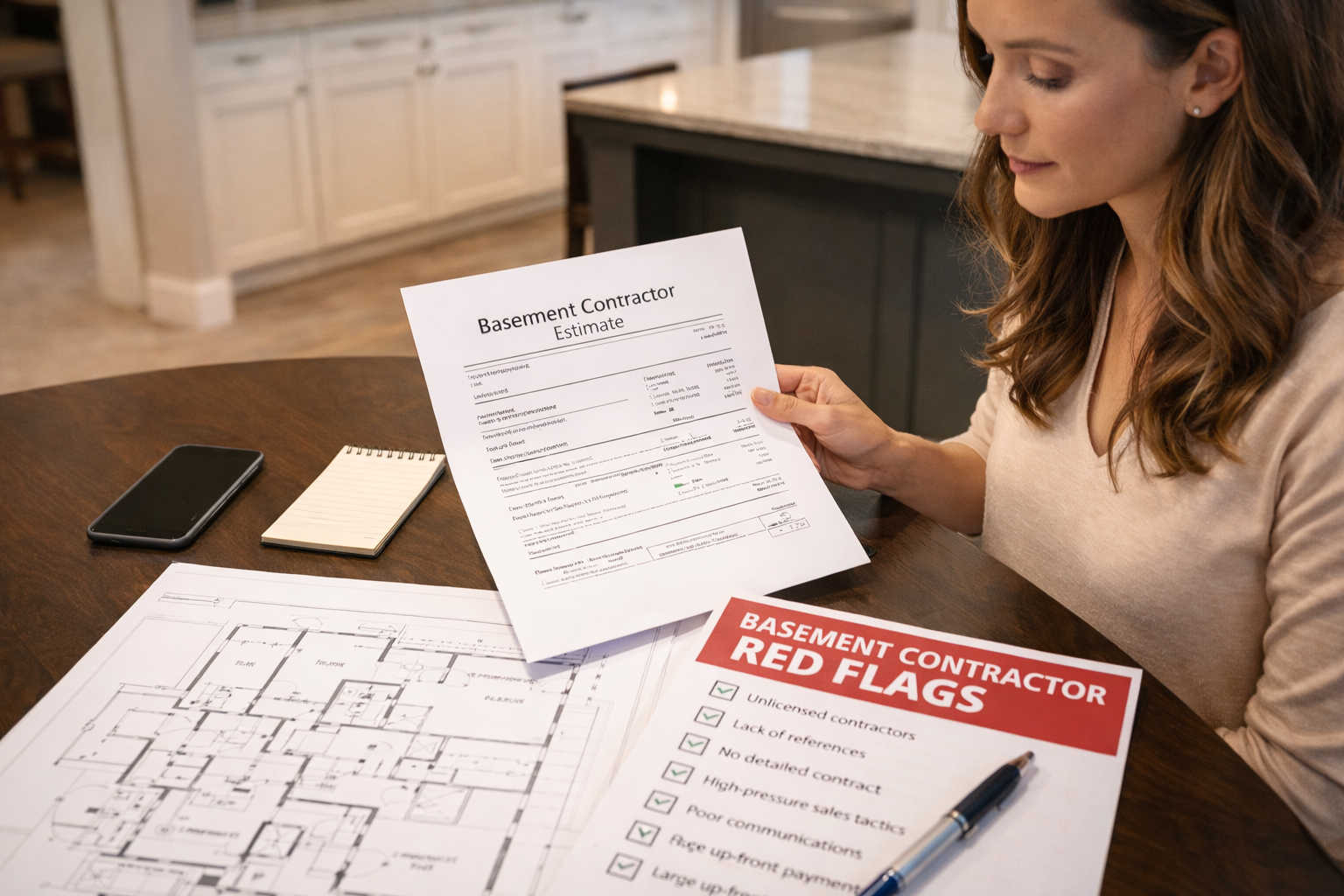
Why This Question Matters in South Jordan
If you’re a homeowner in South Jordan, Utah—especially in areas like Daybreak, The District, or newer developments—you’re not alone in wanting to turn an unfinished basement into real living space. Finishing a basement can add comfort, functionality, and long-term value.
But it also comes with a risk most homeowners don’t expect:
The wrong basement contractor can turn a smart investment into months of delays, failed inspections, moisture issues, and budget blowups.
That’s why the Google question “What are red flags when hiring a basement contractor?” is one of the most important you can ask before you sign anything.
This guide gives you a clear checklist of warning signs to watch for, what they typically lead to, and what a trustworthy contractor should do instead—specifically for South Jordan homeowners.
The Biggest Basement Contractor Red Flags (and What They Usually Mean)
Not every “weird feeling” is a deal-breaker, but some are. The red flags below are the ones that most often lead to real problems later.
Red Flag #1 — The Bid Is Vague or Missing Key Details
If you receive a quote that says something like:
- “Finish basement: $45,000”
- “Basement remodel: labor and materials included”
…that’s not a professional bid. It’s a number.
A real basement finishing estimate should clearly break down:
- scope (rooms, finishes, square footage assumptions)
- electrical plan basics (lights, outlets, panel changes if needed)
- HVAC plan (returns, supply, balancing)
- insulation approach
- drywall and paint level
- flooring type and prep
- doors/trim level
- permit responsibility
- allowances (and what they cover)
What it usually means:
The contractor is leaving room for change orders, confusion, or shortcuts.
Red Flag #2 — They Push You to Start Demo Before Plans Are Final
In South Jordan, basements often involve:
- mechanical rooms
- plumbing stubs
- egress planning if adding bedrooms
- moisture checks
- code compliance
A contractor who pressures you to “start demo now” before you have:
- a finalized layout
- a clear scope
- material selections
- permit plan
…is setting you up for expensive changes later.
What it usually means:
They’re trying to lock you into the project before the details (and true cost) are revealed.
Red Flag #3 — They Downplay Permits or Tell You to Skip Them
This is one of the biggest red flags in basement finishing.
If a contractor says:
- “You don’t need permits for this.”
- “Permits just slow things down.”
- “We can do it without inspections.”
Be careful.
Permits are commonly required for:
- electrical work
- plumbing changes
- adding walls and bedrooms
- egress window installs
- structural changes
Skipping permits can cause:
- inspection failures later
- issues when you sell the home
- insurance problems if something goes wrong
What it usually means:
They either aren’t licensed properly, don’t want oversight, or plan to cut corners.
Red Flag #4 — No License Info, Insurance Proof, or Written Contract
A professional basement contractor should be able to provide:
- proof of license (contractor)
- insurance certificate (general liability)
- written scope and contract
- payment schedule
- warranty terms
If you’re being asked for a large payment without paperwork, that’s a major warning.
What it usually means:
You may have little protection if the job stalls, quality is poor, or disputes arise.
Red Flag #5 — Unrealistic Timeline Promises
Basement finishing takes time because it includes multiple phases:
- framing
- electrical/plumbing/HVAC
- inspections
- drywall and finishing
- flooring and trim
- paint and punch list
If a contractor promises:
- “We can finish your basement in 2 weeks”
- “No delays, guaranteed”
- “Fastest in South Jordan”
…it’s usually not realistic for a full finish.
What it usually means:
They’re either underestimating the job, skipping steps, or relying on a fragile schedule that collapses under normal conditions.
Red Flag #6 — No Plan for Moisture, Insulation, or Basement Comfort
Basements aren’t like main floors. Comfort comes from doing the fundamentals right:
- moisture control
- insulation where appropriate
- air flow and HVAC balance
- basement-safe flooring
If the contractor doesn’t ask questions like:
- “Any history of water intrusion?”
- “Where are your drains and sump?”
- “Do we need a dehumidifier plan?”
- “How’s the air return set up?”
…that’s a red flag.
What it usually means:
They’re focused on cosmetics, not long-term durability.
Red Flag #7 — They Can’t Explain the Basement Finishing Process Step-by-Step
A trustworthy contractor should be able to clearly explain:
- Design and scope confirmation
- Permits and inspections plan
- Framing
- Rough-ins (electrical, plumbing, HVAC)
- Insulation
- Drywall
- Flooring, trim, paint
- Final walkthrough and punch list
If they can’t explain their process, homeowners often end up managing the project for them.
What it usually means:
Lack of systems, poor communication, or inexperience.
Red Flag #8 — Lots of “Allowance” Items With No Guidance
Allowances are normal, but they can become a budget trap when they’re too low.
Common allowance traps in basement finishing:
- flooring
- lighting fixtures
- doors and hardware
- bathroom fixtures (if applicable)
- cabinetry (wet bars)
If the contractor uses allowances without helping you understand realistic pricing, you may end up paying thousands more later.
What it usually means:
The quote may be artificially low to win the job.
Red Flag #9 — They Refuse to Provide References or Local Project Photos
A basement contractor working in South Jordan should be able to share:
- references
- recent photos
- examples of similar layouts
- proof they’ve done comparable work
If you get excuses like:
- “We don’t keep photos.”
- “Our clients don’t like that.”
- “We’re too busy for references.”
…that’s a signal to slow down.
What it usually means:
They may not have consistent results or satisfied clients.
Red Flag #10 — Payment Terms Feel Aggressive or Unbalanced
Beware of:
- large cash-only deposits
- vague payment milestones
- full payment upfront
- pressure tactics
A fair structure typically includes:
- deposit to schedule and begin work
- milestone payments tied to progress
- a final payment after punch list completion
What it usually means:
They may be relying on your deposit to fund other jobs or may disappear under pressure.
How to Hire a Basement Contractor in South Jordan Without Regret
To protect yourself:
- get 2–3 detailed bids with matching scope
- ask “What’s included and excluded?”
- confirm permits and inspections
- review contract terms carefully
- require proof of insurance
- ask about moisture strategy
- request local references
The best contractor doesn’t just build walls. They reduce your risk.
Final Takeaway: The Most Important Red Flags to Remember
If you remember only a few red flags, make it these:
- Skipping permits
- Vague bids
- No license/insurance
- Unrealistic timelines
- No moisture plan
Any one of those can turn your basement finishing project into a costly headache.
Get a Basement Finishing Quote You Can Trust (South Jordan)
If you’re planning to finish your basement in South Jordan, the safest first step is a clear scope and a professional estimate—before you commit.
Schedule a Free Basement Finishing Consultation
Basements Etc
Visit https://www.basementfinishing.com/
Phone: 801-733-7070
We’ll walk through your basement goals, confirm what’s realistic, and help you avoid common contractor red flags before your project begins.
FAQ: Red Flags When Hiring a Basement Contractor
What is the biggest red flag when hiring a basement contractor?
A contractor who suggests skipping permits or avoids inspections is one of the biggest red flags.
Why are vague bids a problem?
Vague bids often lead to change orders, misunderstandings, and disputes about what was “included.”
Should a basement contractor provide insurance documentation?
Yes. Ask for proof of general liability insurance and make sure the contract is written.
How many bids should I get?
At least 2–3 detailed bids with the same scope so you can compare accurately.
How do I know if a contractor is experienced with basements?
Ask about moisture control strategy, HVAC balancing, and basement-safe materials—experienced basement contractors will have clear answers.