

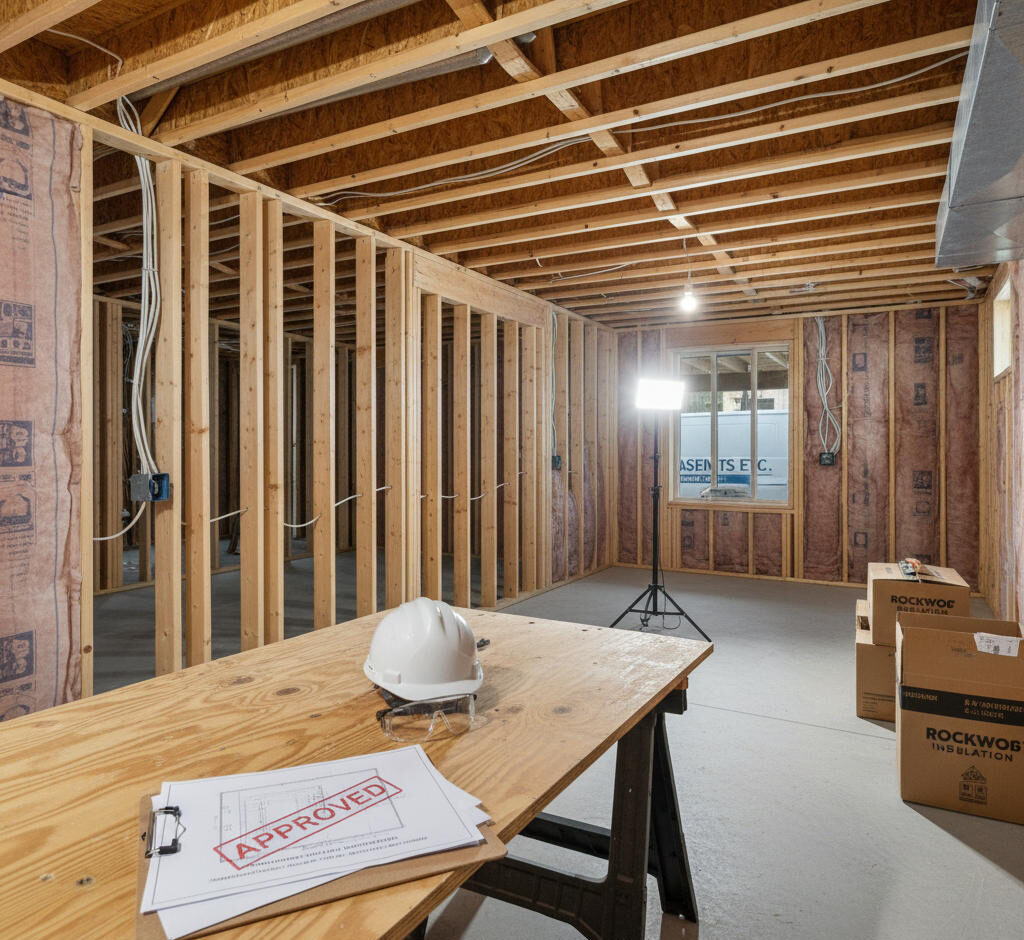
Why Utah Homeowners Can’t Skip Permits When Finishing a Basement
Finishing your basement can be one of the most rewarding home upgrades you’ll ever take on. Whether you’re adding a home theater, guest suite, or rental apartment, it can increase both comfort and home value.
But here’s the catch: in Utah, you can’t simply start framing and drywalling without proper authorization. The permit requirements for basement finishing in Utah exist to protect homeowners, ensure safety, and keep your property compliant with state and city building codes.
At Basements Etc, we’ve seen firsthand how skipping this critical step leads to expensive rework, code violations, and even lost resale value. Let’s walk through exactly what’s required—and why pulling the right permits from the start is worth every minute.
1. Understanding Utah’s Building Code for Basements
Every city in Utah, including Herriman, Draper, and Salt Lake County, follows a version of the International Residential Code (IRC) with local modifications. These codes outline how basements must be constructed, insulated, ventilated, and wired to ensure health and safety.
In short:
If you’re doing more than painting concrete walls, you likely need permits.
Typical basement finishing projects that require permits include:
- Framing or adding walls
- Installing new outlets, switches, or lighting
- Running plumbing lines for a bathroom or kitchenette
- Adding egress windows or exterior access doors
- Modifying HVAC systems
- Structural changes, such as adding load-bearing walls or beams
Even small updates—like moving an outlet or adding a vent—can require approval from your city’s building department.
Tip: Always check with your local building division (e.g., Herriman City or Salt Lake County Building Services) before starting. Each jurisdiction has its own application forms, inspection schedules, and fee structures.
2. Common Permits Needed for Basement Finishing in Utah
When finishing a basement, several different trade-specific permits are usually required. Let’s break them down:
a. Building Permit
This is the main approval required for all construction work. It covers structural framing, insulation, drywall, flooring, and fire safety components.
Your contractor (or you, if acting as the homeowner-builder) must submit floor plans, material details, and sometimes energy-efficiency data to obtain this permit.
b. Electrical Permit
Anytime you add, relocate, or rewire outlets, fixtures, or light switches, an electrical permit is required.
In Salt Lake County, this ensures your new basement wiring meets National Electrical Code (NEC) standards—reducing fire risk and ensuring safe load management.
c. Plumbing Permit
If your basement design includes a bathroom, wet bar, or laundry hookup, a plumbing permit is mandatory.
This covers drain lines, venting, water supply, and fixture installations. Inspectors verify that waste lines are properly sloped and vented to prevent backups or leaks.
d. Mechanical (HVAC) Permit
Adding or extending ductwork, vents, or return air systems triggers an HVAC permit. Utah’s code requires basements to maintain consistent airflow and adequate heating/cooling zones.
e. Egress Window Permit
Adding a bedroom to your basement? You must install an egress window—a life-safety requirement for emergency escape.
Egress windows must meet specific size and clearance dimensions, which inspectors verify before final approval.
Basements Etc pulls all these permits as part of our full-service approach, ensuring your project stays compliant, safe, and resale-ready.
3. Why Skipping Permits Can Cost You (Literally)
Some homeowners are tempted to skip permits to save time or money. Unfortunately, that decision often backfires—sometimes years later.
Here’s how cutting corners can come back to haunt you:
a. Costly Fines and Stop-Work Orders
Cities like Herriman and Salt Lake County actively monitor construction activity. If unpermitted work is discovered, inspectors can issue a stop-work order or require you to open finished walls for inspection—resulting in thousands in extra labor.
b. Failed Home Inspections at Resale
When you sell your home, the buyer’s inspector or appraiser can flag unpermitted work.
Lenders often won’t finance a home with unverified basement construction. This means you might have to retroactively pull permits and prove code compliance—long after the project’s done.
c. Voided Insurance Claims
Homeowner’s insurance policies may not cover damage caused by unpermitted electrical or plumbing work.
Imagine a flooded basement or electrical fire—and your insurer denying the claim because there’s no record of inspection. It happens more often than you’d think.
d. Safety Hazards
Permits aren’t just bureaucracy—they’re protection. Skipping them can result in improper wiring, weak framing, or poor ventilation that affects air quality, fire safety, and structural integrity.
4. How the Permit Process Works in Utah
Getting a permit isn’t as complicated as it sounds—especially when you work with experienced contractors.
Here’s how Basements Etc handles it:
- Design Consultation: We start with a professional design plan and layout that meets both your vision and Utah’s building codes.
- Permit Application: We submit drawings, specifications, and any required energy code documentation to your city.
- Inspections: Each phase (framing, electrical, plumbing, final) is scheduled and coordinated through our project manager.
- Final Approval: Once inspectors sign off, you’ll receive a certificate of completion proving your basement is fully code-compliant.
In Herriman or Salt Lake County, the average turnaround time for residential basement permits is 3–7 business days, depending on project complexity.
5. Real-World Example: When Skipping Permits Backfires
A homeowner in South Jordan finished his 1,000-square-foot basement himself—without pulling permits. When he listed his home three years later, the appraiser noted missing inspection records.
He was forced to tear out sections of drywall so inspectors could verify electrical and plumbing safety—adding $8,000 in rework costs and delaying the sale for over a month.
By contrast, one of our clients in Herriman completed a full basement build—including a wet bar and bathroom—under full permits. During resale, her home appraised $50,000 higher, and the approved permit history gave buyers extra confidence.
6. How Permits Protect Your Investment and Value
Think of permits as your basement’s “paper trail of quality.”
They prove that the work was done safely, inspected professionally, and meets Utah’s standards. This documentation becomes a major selling point for future buyers.
Benefits of permitted basement finishing:
- Peace of mind knowing your space is safe and code-compliant
- Smooth home appraisal and resale process
- Easier insurance claims
- Higher buyer confidence and resale price
- Fewer surprises during inspections
In short, permits protect your family and your financial investment.
Ready to Pull the Right Permits the Easy Way?
You don’t have to navigate the permit maze alone. Whether you’re in Herriman, Draper, or anywhere in Salt Lake County, our licensed team at Basements Etc handles every step—so your project is beautiful, legal, and stress-free.
Get professional help pulling the right permits today!
Visit Basements Etc or call 801-733-7070
to schedule your free basement finishing consultation in Utah.
Frequently Asked Questions (FAQ)
1. How long does it take to get a basement permit in Utah?
Most cities, including Herriman and Salt Lake County, issue residential basement permits within 3–10 business days, depending on project size.
2. Do I need a permit if I’m only finishing walls or flooring?
Yes—if you’re adding insulation, drywall, or electrical outlets, you’ll need at least a building and electrical permit.
3. How much do basement permits cost in Utah?
Permit fees vary but generally range between $200–$800, depending on the project scope and number of inspections required.
4. Can I apply for my own permit, or does my contractor do it?
Homeowners can apply directly, but it’s usually faster and easier when handled by licensed basement finishing contractors in Salt Lake County like Basements Etc.5. What happens if I sell my home with unpermitted basement work?
You may face lower appraisals, delayed closings, or legal disclosure issues. Retrofitting permits after the fact can be time-consuming and costly.