

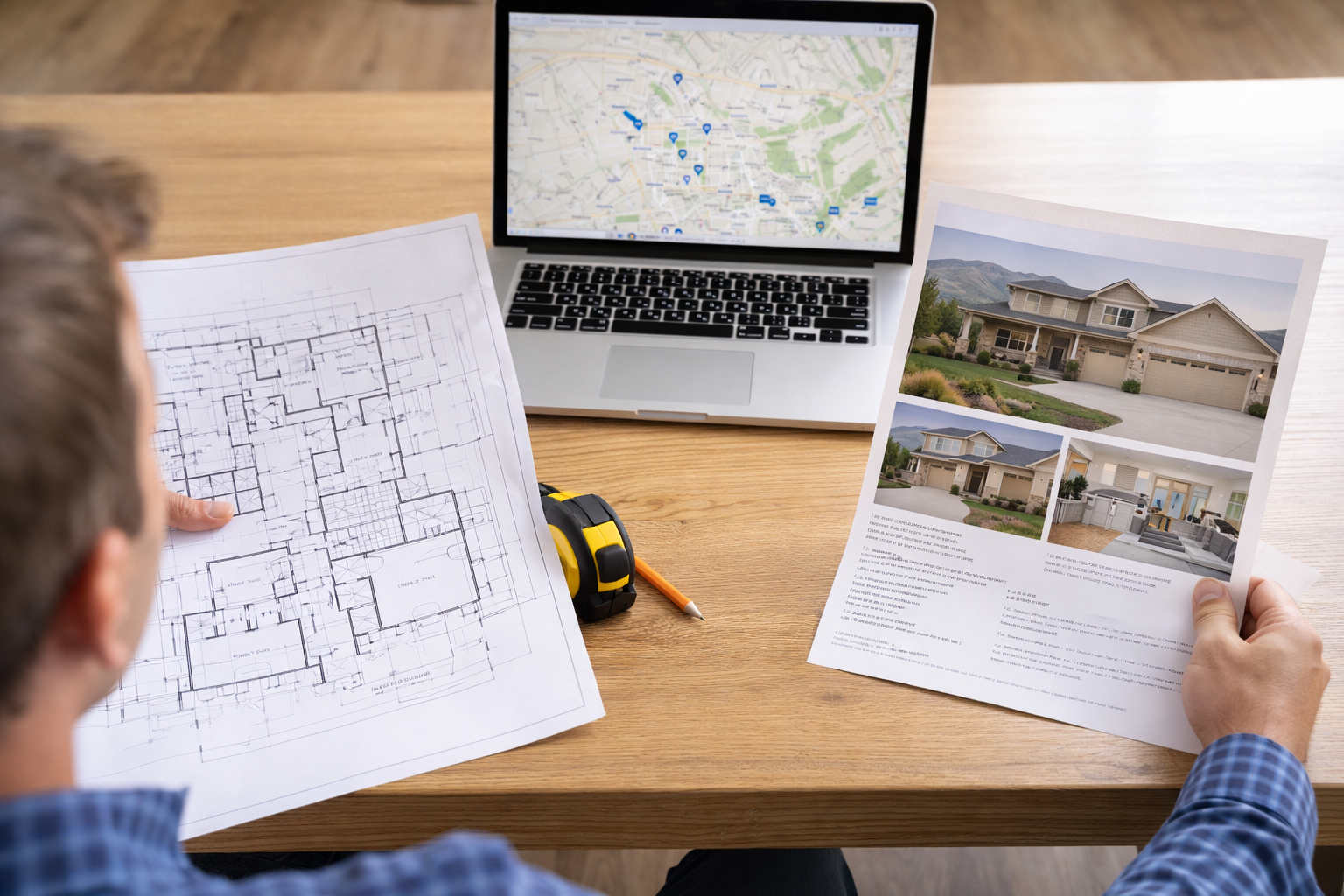
The Question Behind Almost Every Herriman “Buy vs Build” Decision
If you’re house-hunting in Herriman, Utah, you’ve probably asked a version of this question:
Is it cheaper to build a custom home or buy an existing home in Utah?
It’s a smart question, because “cheaper” can mean two different things:
- Cheaper upfront (purchase price or construction cost today)
- Cheaper long-term (maintenance, energy bills, remodels, and lifestyle fit over time)
In Herriman specifically, the math gets complicated because many homes are newer, lots can be limited or premium-priced, and “move-in-ready” homes often still need upgrades to match what today’s buyers want.
This guide breaks it down clearly—so you can make a confident decision based on real Utah cost drivers, not national averages.
Quick Answer: Which Is Usually Cheaper in Utah?
For many Herriman homeowners:
- Buying an existing home is often cheaper upfront (especially if land prices are high).
- Building a custom home can be cheaper long-term when you factor in energy efficiency, fewer repairs, and avoiding a major remodel—but it typically requires a higher total budget and longer timeline.
Herriman home prices vary by neighborhood and market conditions. Data sources such as Zillow and Redfin show Herriman home values and median sale prices in the general range of the high-$500Ks to mid-$600Ks in recent reporting periods. (Zillow)
What “Cheaper” Really Means for Herriman Homeowners
Before comparing buy vs build in Utah, define your goal:
If your priority is the lowest upfront cost
Buying usually wins because you’re purchasing an existing asset without paying:
- full custom design costs
- construction management overhead
- potential premium lot development costs
If your priority is best value per lifestyle and long-term ownership
Building can win because you can:
- design the home around how you actually live
- avoid paying for someone else’s outdated choices
- reduce future remodel spending
The True Costs of Buying an Existing Home in Herriman
Buying seems straightforward: you pay the purchase price, close, move in. But the “real” cost is often purchase price plus improvements.
Common Herriman post-purchase costs homeowners underestimate
1) Renovation and personalization
Even newer homes frequently need:
- flooring upgrades
- kitchen and bath updates
- lighting improvements
- basement finishing or reworking space
- landscaping and fencing
2) Maintenance and replacements
Existing homes may bring sooner-than-expected costs for:
- roof, HVAC, water heater
- windows/doors (depending on age)
- appliances
- exterior paint or concrete
3) Energy performance
A newer home can be efficient, but if it wasn’t built to your standards (insulation, HVAC zoning, window package), your monthly operating costs may be higher than expected.
Bottom line: Buying can be cheaper upfront, but it’s not uncommon for homeowners to spend significant additional money in the first 12–24 months to make the home feel “right.”
The True Costs of Building a Custom Home in Utah
A custom home budget is more than “cost per square foot.” It’s also about land, utilities, and decisions.
What typically goes into a custom build budget
1) Land and lot development
Depending on lot conditions, development can include:
- grading and excavation
- utility connections or extensions
- drainage solutions
- retaining walls on sloped lots
This is one reason build costs can swing dramatically from one project to the next.
2) Construction costs
National builder cost studies show construction cost components and the role of lot costs in total new-home pricing. (National Association of Home Builders)
While national data isn’t Utah-specific, it supports a key reality: the total cost of a new home is not just materials and labor—it includes lot and other non-construction components.
3) Design, engineering, and permitting
Custom homes typically require:
- architectural and engineering input
- plan review
- permits and inspections
4) Selections and finish level
This is where homeowners unintentionally “upgrade” themselves into a new pricing tier:
- cabinetry, countertops, flooring
- windows and doors
- appliances and plumbing fixtures
- trim detail, ceiling treatments
Bottom line: Building is less likely to surprise you after move-in (because you chose everything), but it can surprise you during planning if allowances and selections aren’t realistic.
A Practical Buy vs Build Comparison for Herriman
Buying is usually the better value when:
- you find a home that fits 80–90% of your needs
- you don’t want a long build timeline
- you don’t want to manage hundreds of decisions
- you’d rather budget for small upgrades than full customization
Building is usually the better value when:
- you can’t find the layout you want in Herriman inventory
- you want a basement, plan, or multi-generational design that’s hard to buy
- you want higher efficiency and lower maintenance long-term
- you don’t want to pay for a home and then remodel it
The “Hidden Math” Most People Miss
This is where the decision becomes clearer.
The Remodel Trap
A common scenario:
- Buy a home that’s “close enough”
- Live with compromises for a year
- Spend heavily remodeling kitchen, baths, or basement
Depending on scope, major remodels can close the gap between buying and building faster than homeowners expect—especially when layout changes or structural work are involved.
The Time Value Trade-Off
Building requires:
- planning time
- permitting time
- construction time
If you need to move quickly, buying often wins even if it’s not perfect.
The Lifestyle Fit Factor
If the home doesn’t fit your life, you “pay” in non-financial ways:
- daily frustration with layout
- lack of storage
- inadequate space for guests or multi-gen living
- poor flow for entertaining
Over a 10-year horizon, lifestyle fit can matter as much as dollars.
So, Is It Cheaper to Build or Buy in Utah?
For Herriman homeowners, a fair conclusion is:
- Buying is often cheaper upfront, especially when land and lot development costs are high and you find a home that already matches your needs. Herriman market data reflects pricing that often sits in a similar band to what many mid-to-upper builds might cost before land and upgrades. (Zillow)
- Building can be the better long-term value when you would otherwise buy and remodel, or when you want specific features that are expensive to retrofit (layout, basement design, energy efficiency).
The most accurate answer comes from comparing:
- the total cost of buying + planned upgrades, versus
- the total cost of building + land + finishes
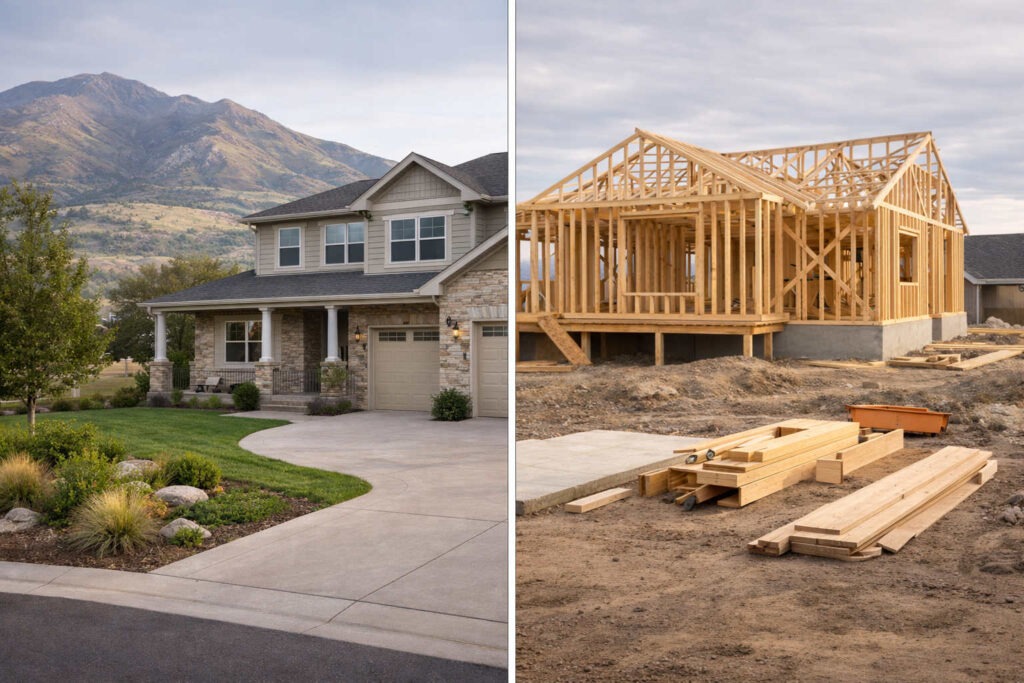
Get a Herriman Buy vs Build Cost Comparison
If you’re deciding whether to build a custom home or buy an existing home in Herriman, the fastest way to gain clarity is a real comparison based on your goals, timeline, and budget.
Schedule a Free Custom Home Consultation
Visit: https://basementfinishing.com/our-services/custom-homes/
Phone: 801-733-7070
Basements Etc can help you evaluate the buy vs build decision with realistic expectations—before you commit.
FAQ: Buying vs Building a Custom Home in Utah
Is it always cheaper to buy than build in Utah?
Not always. Buying is often cheaper upfront, but building can be better value if you would otherwise renovate heavily after purchase.
What costs are commonly forgotten in custom builds?
Lot development, utility connections, engineering, permits, landscaping, driveways/flatwork, and realistic finish allowances.
Does building a custom home take longer than buying?
Yes. Building typically requires planning, permitting, and construction time, while buying can close in weeks.
If I buy a home in Herriman, what upgrades should I budget for?
Common upgrades include basement finishing, flooring, lighting, kitchen updates, storage improvements, and landscaping.
How do I decide if building is worth it?
If your “must-haves” are expensive to retrofit—layout changes, multi-gen suite, high-efficiency build, specialized basement design—building may be the smarter long-term choice.