

Your Draper Basement Has More Potential Than You Think
Unfinished basements in Utah aren’t just cold concrete storage spaces—they’re some of the largest untapped square footage in the home. Converting that space adds new rooms, increases property value, and expands your lifestyle.
But to do it right—and avoid moisture problems, code issues, or comfort challenges—you need a builder who understands Utah soil, climate, and building regulations.
Here’s how we approach full basement conversions as Draper’s leading finishing professionals.
1. Start With a Layout Engineered for Function
The right design makes a basement feel like part of the home, not an afterthought.
We Evaluate Every Draper Basement For:
- Structural load paths and beam spans
- Plumbing stack locations for bathrooms or wet bars
- Natural light points and ideal room placement
- HVAC supply and return balance
- Space planning for family needs
A basement layout should be engineered, not improvised.
2. Moisture Control: The Non-Negotiable Utah Requirement
Basements in Draper and along the Wasatch Front experience:
- Cold slab temperatures
- Seasonal humidity pockets
- Concrete seepage if not sealed
- Poor initial insulation from builders
Our Moisture-Control System Includes:
- Crack sealing + concrete waterproofing
- Rigid foam insulation against foundation walls
- Vapor barriers behind framing
- Thermal breaks under flooring
- Controlled ventilation and dehumidification
Skipping this step is the #1 cause of mold in DIY basement projects.
3. Insulation That Actually Works for Basements
Basements lose heat differently than above-grade floors. We use systems designed for Utah’s freeze–thaw climate.
Best Insulation Approach:
- Rigid foam on concrete
- Mineral wool inside wall cavities
- Optional spray foam in problem areas
- Sound-dampening insulation between floors
This produces a basement that feels as warm as the main level—even in January.
4. Choosing Flooring and Ceiling Materials That Last
Because basements sit below grade, not all flooring works.
Best Flooring Options for Draper Homes:
- Luxury vinyl plank (waterproof + warm)
- Carpet tiles (easy to replace)
- Engineered wood (only with insulated subfloor)
- Epoxy (ideal for gyms or workshops)
Ceiling Options:
- Drywall for a clean, modern look
- Drop ceiling for easy future access
- Painted exposed ceilings for an industrial feel with added height
Your ceiling choice should align with your HVAC path and access needs.
5. Legal Bedroom Requirements in Utah
If you plan to add bedrooms, Draper City enforces strict egress and life safety codes.
A Legal Basement Bedroom Must Have:
- A minimum 5.7 sq ft egress window opening
- A sill no more than 44 inches above the floor
- A window well with ladder for deep foundations
- Smoke and CO detectors tied to the home system
When done right, adding legal bedrooms significantly boosts resale value.
6. Finishing Touches That Make the Space Feel Like Home
Beyond walls and flooring, we add design touches that elevate the entire basement:
- Warm-balanced recessed lighting
- Custom cabinetry and built-ins
- Smooth wall texture or knockdown finish
- Smart thermostat zoning
- Sound dampening between floors
This is how we ensure your Draper basement feels like new living space, not “just a basement.”
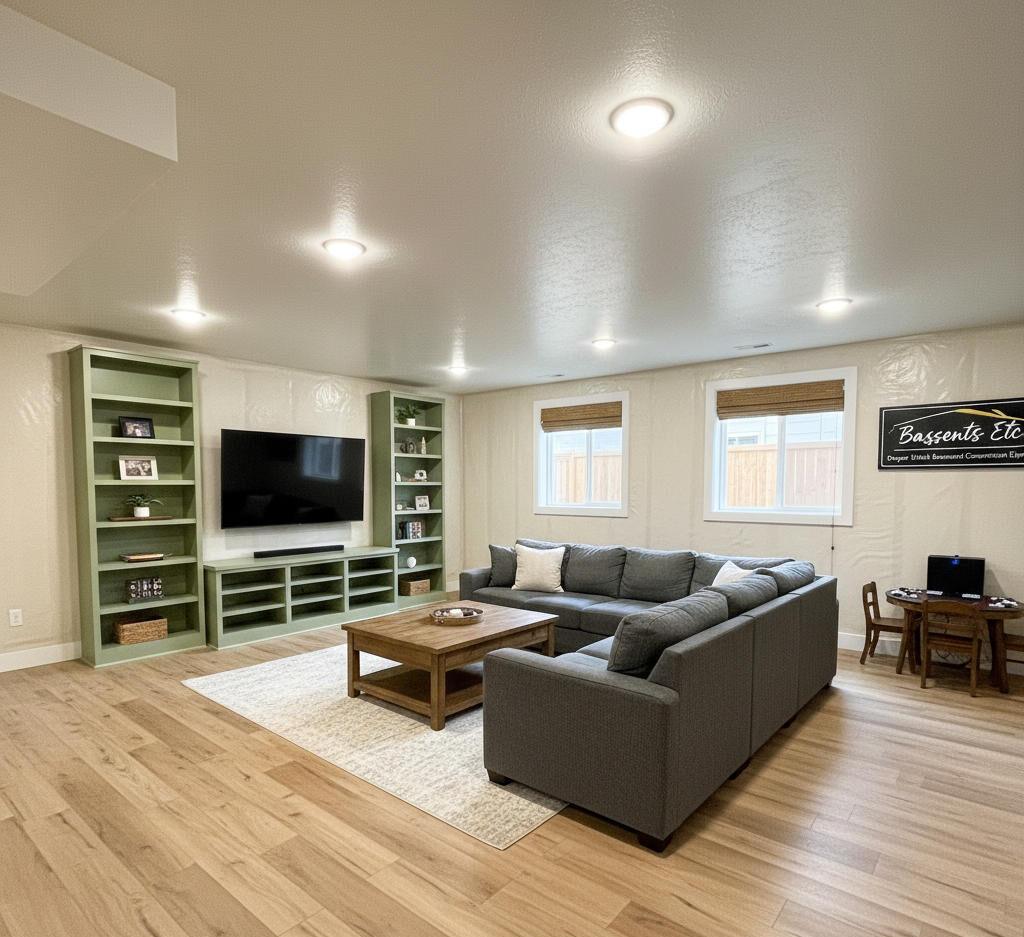
Let Draper’s Basement Experts Build Your New Living Space
A basement conversion is one of the highest-ROI upgrades you can make in your Draper home—but only when designed and built by experts who understand moisture, insulation, and code requirements.
Talk With Our Design-Build Team Today
https://www.basementfinishing.com/our-services/basement-finishing/
Call: 801-733-7070
We’ll help you turn raw concrete into a comfortable, beautiful living space—built to Utah standards.