

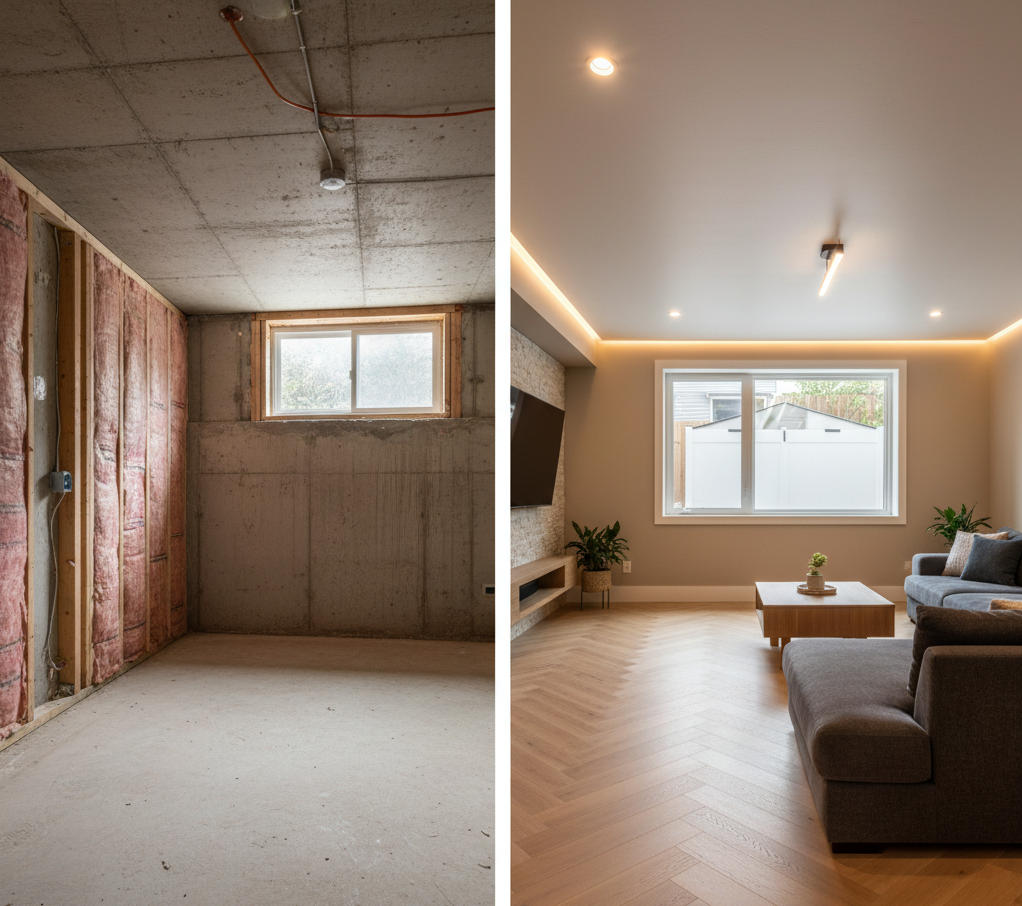
Converting an unfinished basement is one of the smartest ways to boost your home’s value and livable square footage in the highly competitive Utah housing market. For homeowners in Riverton, Herriman, and even the northern parts of Utah County, that empty concrete space is a blank canvas just waiting to become a stunning home office, guest suite, or entertainment area.
The process of how to convert an unfinished basement into a living space Utah homeowners will love requires specific attention to codes, moisture, and insulation. Here is your essential guide to transforming your subterranean space.
Planning Your New Layout (The Foundation of Success)
Before swinging a hammer, you must define the space’s purpose. Will it be an apartment, a family room, or a combination of rooms?
- Work Around Utilities: Look up! HVAC ducts, plumbing runs, and electrical panels are fixed points. Your design should strategically frame around them (e.g., using a dropped ceiling or soffits) to maximize ceiling height.
- Stairs and Flow: The staircase placement is crucial. Design the layout to create a natural, welcoming entry point that doesn’t feel like walking into a maze.
- Maximize Natural Light: Designate your most important living spaces (like bedrooms or offices) near existing windows, as these provide crucial light and emergency egress.
Moisture and Insulation: Protecting Your Investment
Utah may be dry, but basements are concrete boxes surrounded by damp soil, making moisture control non-negotiable. Skipping this step is the fastest way to invite mold, mildew, and costly damage.
- Moisture Management: The first step of any quality basement finishing Utah County or Salt Lake project is addressing moisture. This may involve exterior waterproofing, interior drainage systems, or applying moisture-resistant sealants to the concrete walls and floors.
- Insulation is Key: Basements are naturally cold. Use moisture-resistant insulation—such as rigid foam board or moisture-resistant fiberglass batts with a vapor barrier—inside the framed walls. This keeps the space comfortable, energy-efficient, and prevents condensation.
- HVAC Integration: Ensure your existing furnace and AC unit can handle the added square footage, or plan to zone your basement with its own ductwork or a dedicated mini-split system.
Flooring and Ceiling Ideas for Below-Grade Spaces
Since your basement is below grade, you need materials built to withstand a potential moisture event better than traditional options.
| Area | Recommended Finishing Material | Why It Works in a Basement |
| Flooring | Luxury Vinyl Plank (LVP) or Tile | Waterproof, highly durable, easy to clean. |
| Walls | Moisture-Resistant Drywall (Green Board) | Designed to resist moisture better than standard drywall. |
| Ceiling | Tiled or Suspended Ceiling | Allows access to plumbing, wiring, and HVAC above the ceiling plane for easy repair. |
| Ceiling | Painted Drywall (Maximum Height) | Best for maximizing ceiling height and creating a clean look. |
Legal Bedroom Requirements in Utah
If you plan on having a bedroom in your finished basement—a key factor for increasing home value—you must comply with local safety codes, particularly regarding egress.
For a basement room to be legally considered a bedroom in Utah, it must have:
- A Window or Door: An operable emergency escape and rescue opening (EERO).
- Minimum Clear Opening: The opening must be at least 5.7 sq. ft. (5 sq. ft. if at grade) with a minimum clear height of 24 inches and a minimum clear width of 20 inches.
- Sill Height: The bottom of the opening must be no more than 44 inches above the finished floor.
Adding a bedroom often means installing a new, larger egress window, which requires breaking through the foundation—a job best left to licensed professionals.
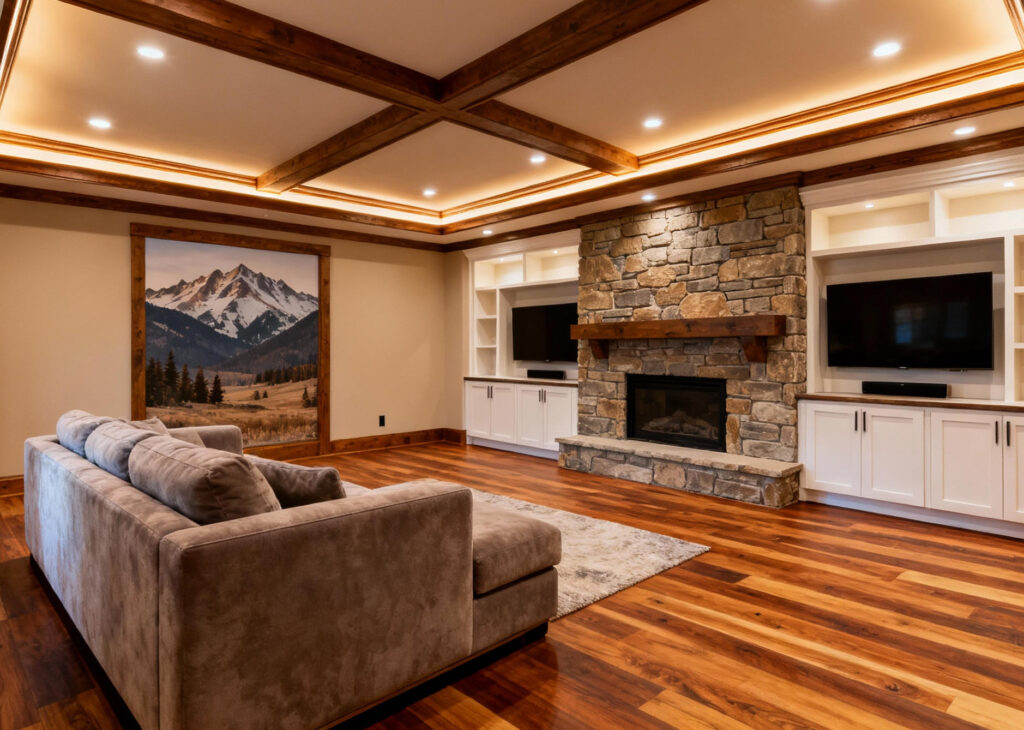
Ready to Transform Your Riverton Basement?
Finishing your basement correctly requires a blend of design expertise and compliance knowledge specific to the Salt Lake Valley.
Talk with our design-build team today to start planning your perfect, fully compliant, and beautiful new living space!
FAQ: Basement Finishing in Utah
Q: Do I need a permit to finish my basement in Riverton, UT?
A: Yes. Any work involving framing, electrical, plumbing, or structural changes (like installing an egress window) requires a permit from the city or county. This ensures your renovation meets safety codes.
Q: Is carpet or LVP better for a Utah basement floor?
A: LVP (Luxury Vinyl Plank) or tile is generally recommended. Basements are prone to moisture and humidity; LVP is 100% waterproof and highly durable, making it a safer long-term choice than carpet, which can trap moisture and harbor mold.
Q: How long does the average basement finish take?
A: A typical mid-range basement finish in the Salt Lake area takes between 8 to 12 weeks from initial framing to final paint, assuming all materials are on hand and inspections are passed promptly.