

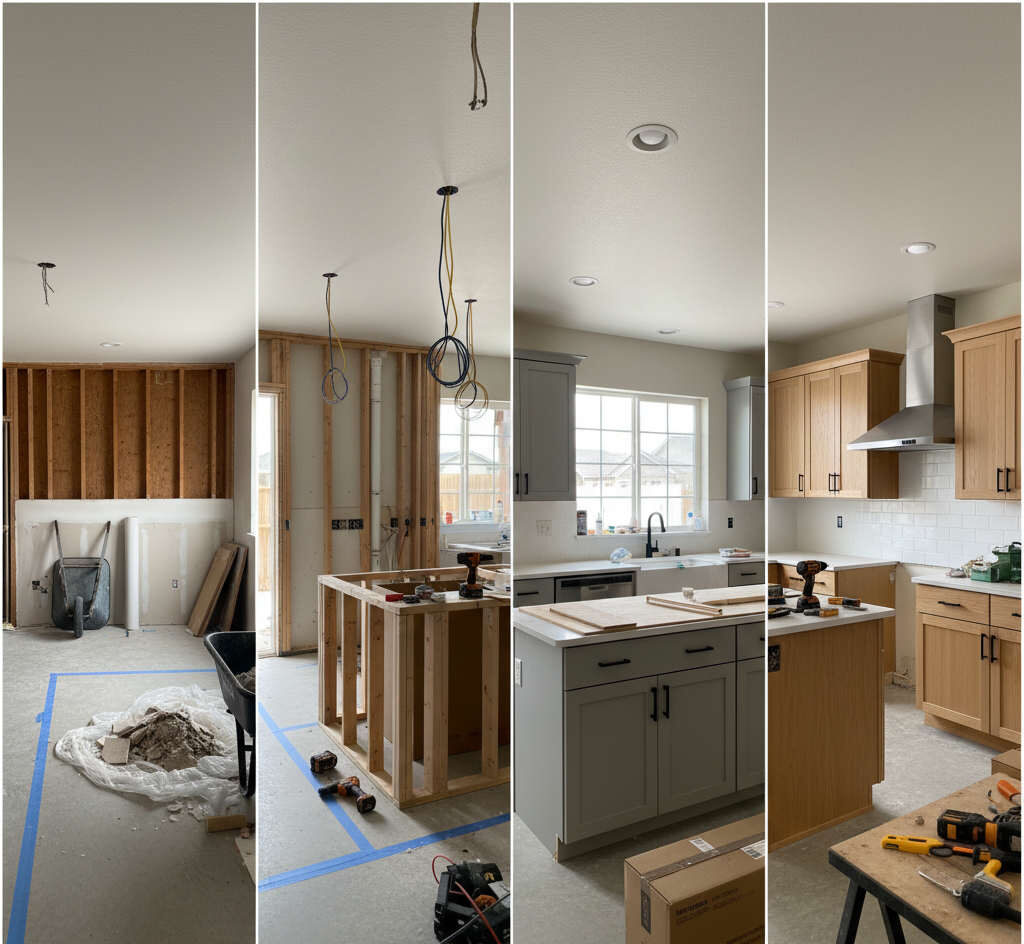
Why So Many Kitchen Remodels Go Wrong Before They Even Start
If you’re planning a kitchen remodel in Riverton, Utah, you’re probably feeling excited—and at the same time, potentially a little overwhelmed. That’s completely normal.
One of the most common questions homeowners ask is:
“What comes first when remodeling a kitchen?”
The surprising truth is that most kitchen remodel problems don’t happen during construction. They happen before the first cabinet is removed.
Skipping or rushing the early steps leads to budget overruns, delays, stress, and regret.
This guide breaks down the exact order a kitchen remodel should follow, based on real-world experience with Riverton kitchen remodel renovations, so you can move forward with confidence instead of confusion.
The Short Answer: Planning Comes First—Always
Before tools, materials, or demolition, the very first step in a kitchen remodel is planning.
Not picking cabinets.
Not choosing countertops or buying appliances.
Not scheduling the demolition crew.
Planning is the foundation of a successful kitchen remodel.
Everything else builds on it.
Step 1: Define Your Goals and How You Use the Kitchen
The first thing that comes first isn’t design—it’s clarity.
Ask yourself:
- What doesn’t work in your current kitchen?
- Is storage the issue?
- Is the layout cramped or outdated?
- Do you entertain often?
- Is resale value a priority?
- Do you have adjoining rooms that allow a potential expansion of the kitchen area?
In Riverton homes, common issues include:
- Outdated layouts with lowered ceilings and peninsulas.
- Poor island placement
- Limited lighting
- Inefficient storage and not enough drawers
- Closed-off kitchens that feel dated
A remodel without clear goals often leads to wasted money.
Step 2: Establish a Realistic Budget (Before Design)
Once goals are clear, the next step is setting a realistic budget range.
Many homeowners make the mistake of designing first and budgeting later. This almost always leads to disappointment. This is tricky since you will usually need to get a contractor involved to keep your budget accurate and realistic.
A proper budget accounts for:
- Cabinetry (often the largest cost)
- Demo & Potential Layout changes
- Plumbing and electrical updates, inc. new Fixtures
- Permits and inspections
- Appliances, Flooring, Countertop,s and Backsplash options.
In Riverton, most full kitchen remodels fall between $30,000–$70,000, depending on scope.
Step 3: Lock in the Layout (This Is the Most Critical Step)
After planning and budgeting, the layout comes next—and this is where many Riverton remodels go off track.
Layout decisions include:
- Wall Removal & Ceiling Height Changes
- Island size and placement
- Appliance selections and locations
- Walkways and clearances
- Pantry location and configuration
Layout changes are the biggest cost driver in a kitchen remodel.
Changing the layout after construction starts causes:
- Budget overruns
- Permit issues
- Un-scheduled delays
This is why layout must be finalized before any materials are ordered.
Step 4: Confirm Structural, Plumbing, and Electrical Requirements
Once the layout is finalized, it’s time to address the mechanical side of the remodel.
This includes:
- Identifying load-bearing walls
- Planning electrical and how to add additional circuits
- Updating lighting plan
- Confirming plumbing and appliance locations.
- Venting options for range hood
- Is there any hidden plumbing, electrical or ductwork in false ceilings or walls which will be changing with the new design and layout.
In Riverton, permits are required for:
- Structural changes
- Electrical work
- Plumbing modifications
Skipping this step or doing it out of order is one of the most common sequencing mistakes contractors see.
Step 5: Pull Permits and Schedule Inspections
Permits should be pulled before demolition begins, not after.
Proper permitting:
- Protects resale value
- Verifies your contractor is licensed
- Ensures code compliance
- Prevents forced tear-outs
- Keeps insurance coverage intact
In Salt Lake County, inspections are typically required at multiple stages, which must be scheduled into the project timeline.
Step 6: Selections and Order Cabinets: Choose Cabinet style and color, Appliances, Flooring, Tops, Fixtures Etc.
Only after planning, layout, and mechanical changes are complete, and permit applications are submitted, then its time to make selections.
Cabinets are usually 6-10 weeks out from the date of order, so this typically is the first thing ordered. However, it is critical to make sure all dimensions are verified, appliances are selected and ordered, so that exact cabinets can be ordered. Without a completed design, exact dimensions, and appliance selections, it is impossible to order cabinets. Once cabinets are ordered and a firm date to take delivery is set, an accurate remodel timeline can be created. It doesn’t make sense to start demo and leave the home without a kitchen, only to sit around and wait for cabinets. Once the cabinet timeline is set, you can create a backwards calendar to decide the project start date. Then the rest of the selections can be finalized and materials ordered to prevent completion and construction delays.
Step 7: Demolition and Project Start — not Before
Only once cabinet order has been finalized and all selections are in place are you ready to begin.
Skipping these prior steps often results in:
- Rushed decisions
- Expensive change orders
- Long Project delays
- Overall Frustration
Following these steps keeps the project efficient, controlled, and purposeful.
Step 8: Framing, Mechanical Rough-Ins (Electrical, Plumbing, HVAC)
After demolition, the rough-in phases begin.
This is when:
- Framing Changes are made
- Electrical wiring and new circuits are installed for new appliances and lighting options
- Plumbing is installed or re-routed and verified for sinks and ice makers
- Venting and gas line locations are added or modified as needed
- Lighting locations are finalized
Nothing cosmetic happens yet—and that’s intentional. These are all things that will soon be covered by drywall, flooring and cabinetry. Now is the time to make sure everything is ready for the finishing touches.
Skipping or rushing rough ins leads to visible problems later.
Step 9: Sheetrock repair, Paint & Cabinet Installation
Once rough ins pass inspection, walls can be finished and painted. Then cabinets are installed. (NOTE: The type of flooring selected will determine whether flooring will be installed prior to or after cabinetry – See Contractor for additional details).
Cabinets must be:
- Properly leveled
- Anchored correctly
- Verify all appliance and plumbing spaces are accurate
This step sets the stage for everything that follows.
Step 10: Countertops, Backsplash, and Finishes
With cabinets in place, finishes can finally begin:
- Countertops are templated and installed
- Plumbing fixtures (Sinks, Faucets & Disposals) are installed
- Backsplash is added
- Flooring is completed
- Trim and hardware are installed
- Appliances installed and connected
Finishes should always come last, not first.
Step 11: Final Walkthrough and Adjustments
The final step is a detailed walkthrough to ensure:
- Doors and drawers are aligned and function properly
- Appliances are connected and working properly
- Plumbing & Lighting work as designed
- Any adjustments and punch list items are addressed
This ensures the remodel meets both functional and aesthetic goals.
Common Sequencing Mistakes Riverton Homeowners Make
Contractors frequently see these issues:
- Choosing Appliances before layout only to find they won’t fit in the space available
- Demolishing before planning and finding hidden issues
- Ordering cabinets before final design and layouts are complete and selections made.
- Skipping Rough in and layout planning
- Underestimating timelines
Each mistake adds stress and cost.
The Correct Kitchen Remodel Order (At a Glance)
- Planning and goals
- Creating a Realistic Budget
- Layout design
- Confirm Design and Misc. requirements
- Apply for Permits and inspections
- Selections & Cabinet Order
- Project Start & Demolition
- Rough ins
- Cabinet installation
- Countertops and finishes
- Final walkthrough
Final Answer: What Comes First When Remodeling a Kitchen?
Planning always comes first.
Then Budget & layout.
Then Selections inc. Cabinet and Appliance ordering.
Then Construction begins
Then Finishes & Completion
Following this sequence reduces stress, prevents mistakes, and protects your investment.
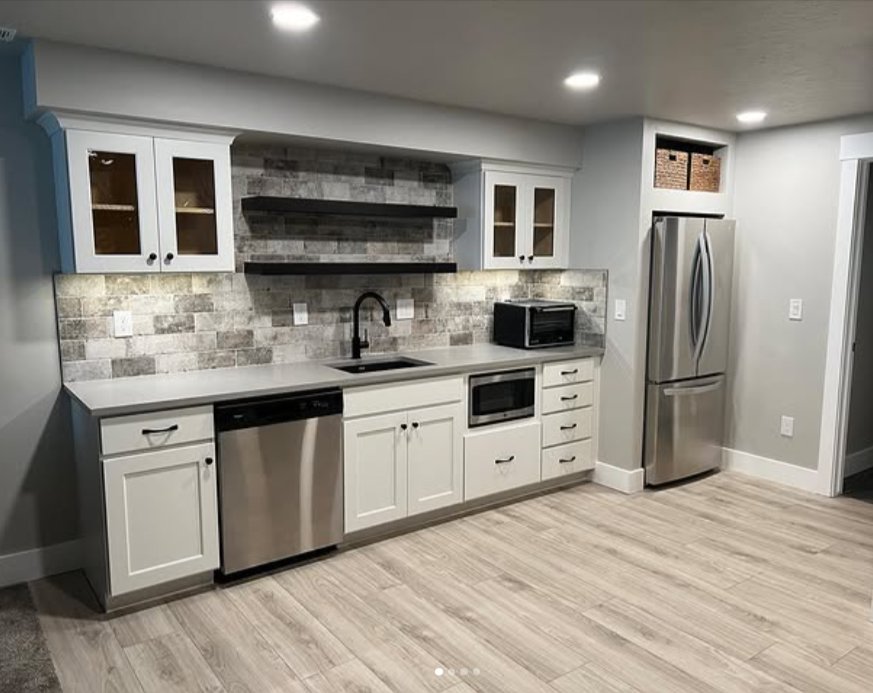
Start Your Kitchen Remodel the Right Way
A successful kitchen remodel doesn’t start with a hammer—it starts with a plan.
Before you make decisions or spend money, get professional guidance tailored to your Riverton home.
Schedule a Free Kitchen Remodeling Consultation
Visit- https://www.basementfinishing.com/
Call- 801-733-7070
Ace Construction Etc. helps Riverton homeowners remodel kitchens with clarity, structure, and confidence—without costly missteps.
Frequently Asked Questions (FAQ)
What is the very first step in a kitchen remodel?
Planning—defining goals, budget, and layout before construction.
Can I choose cabinets before finalizing the layout?
No. Cabinets must match the finalized layout to avoid costly changes. It is also critical that appliances have been finalized so correct spacing can be accounted for when ordering cabinets.
Do I need permits for a kitchen remodel in Riverton?
Yes, if moving electrical, plumbing, or if structural work is involved.
How long does a kitchen remodel take?
Typically, 3–4 weeks, once demo begins, depending on scope and complexity.
What happens if I skip steps?
Skipping steps often leads to delays, higher costs, frustration and regret.