

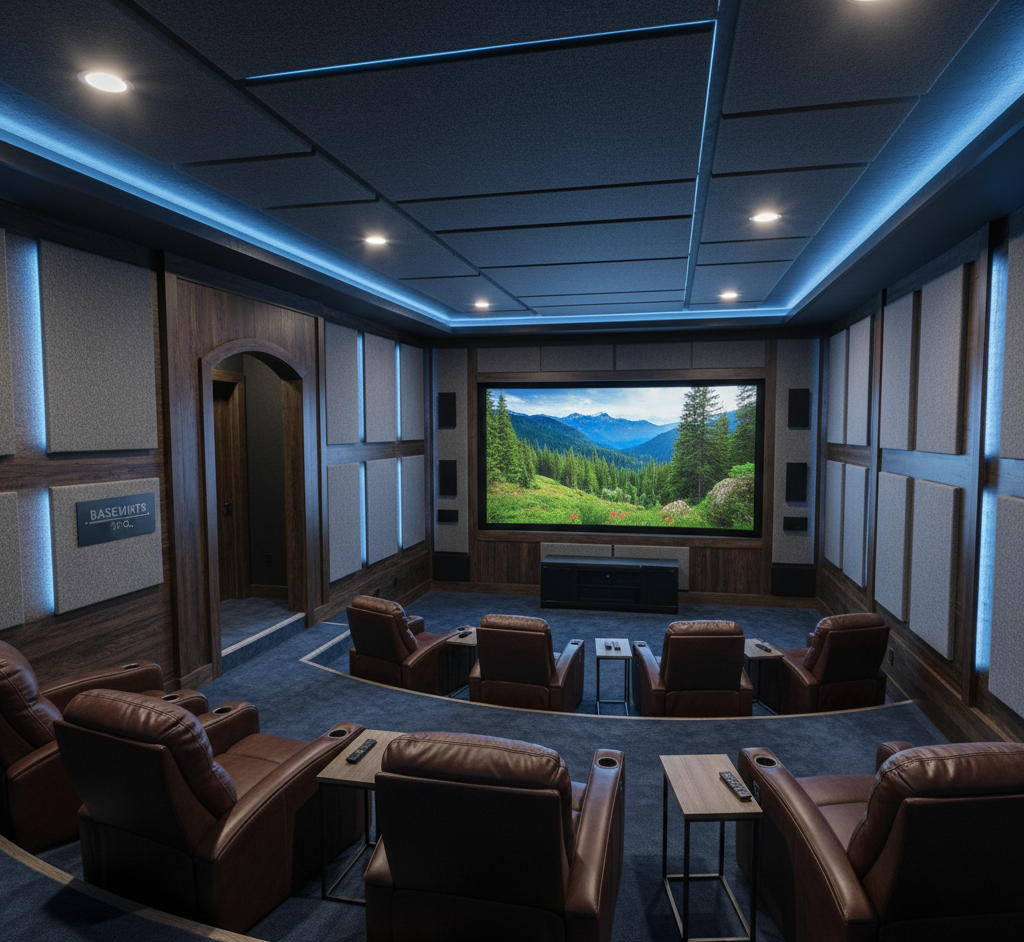
Transform Your Draper Basement Into a True Cinematic Experience
When most homeowners imagine finishing their basement, they picture a game room, gym, or additional bedrooms. But in Draper and along the Wasatch Front, the fastest-growing trend is the dedicated basement home theater—a space engineered specifically for sound, lighting, and comfort.
Because basements are naturally darker and quieter, they offer the perfect foundation for theater-level immersion. But building a real home theater requires far more than a large screen and a few recliners. It requires precision design, acoustic engineering, and a deep understanding of Utah’s construction standards.
Below is a full expert breakdown of how we design high-performance basement home theaters at Basements Etc.
1. Acoustic Engineering: The Heart of a Real Theater
Acoustics—not décor—determine whether your home theater sounds like a movie cinema or a loud living room. Utah basements have thick concrete surfaces that bounce sound aggressively, which is why professional treatment is essential.
Professional Acoustic Components:
- Decoupled framing to prevent vibrations from traveling to upper floors
- Mineral wool or acoustic batt insulation behind drywall
- Fabric-wrapped acoustic wall panels to eliminate echo
- Corner bass traps that control low-frequency rumble
In Draper basements, proper acoustic strategy is the difference between crisp dialogue and muddy sound.
2. Lighting Design That Sets the Mood
Lighting makes or breaks a home theater. DIY lighting almost always leads to glare, shadows, or a flat-looking screen. As professionals, we build out multi-zone lighting systems that create ambiance without washing out the picture.
Our Theater Lighting Approach:
- Dimmable LED cans (warm color temperature ideal for theaters)
- Perimeter cove lighting for soft indirect glow
- Step or riser lighting for multi-level seating safety
- Optional LED trim around the screen for dramatic theater aesthetic
Basements have the advantage of minimal natural light, making Draper homes ideal for high-end projection setups.
3. Smart Seating Layouts and Sightline Geometry
Before a single wall goes up, we map out seating geometry. Positioning determines:
- Riser heights
- Screen dimensions
- Speaker locations
- Viewing angles
Proven Layouts We Use in Utah Homes:
- Two-row riser system with full-recline theater seating
- Hybrid lounge layout for families that want both theater and hangout space
- Wide-wall screen rooms for larger Draper basements
Your seating isn’t added after the room is built—it dictates the room’s engineering.
4. Soundproofing and Wiring Infrastructure
The biggest mistake homeowners make is forgetting that theaters shake the house. Proper sound isolation stops subwoofers from rattling bedrooms upstairs.
Our Standard Theater Isolation System:
- Double drywall + Green Glue damping
- Independent ceiling channels to break sound transfer
- Fully sealed electrical penetrations
- Pre-wired conduit for future upgrades (projectors, speakers, automation)
We bring Salt Lake County’s building codes and safety standards into every electrical run, ensuring the room is as safe as it is immersive.
5. Real Utah Theater Projects: What They Teach Us
One recent Draper project involved a narrow basement with ceiling height challenges. Instead of forcing large recliners, we engineered:
- Custom low-profile risers
- Acoustically isolated walls
- A 125” projection screen
- Smart-controlled lighting scenes
The finished result blended comfort, cinematic precision, and architectural alignment with the rest of the home.
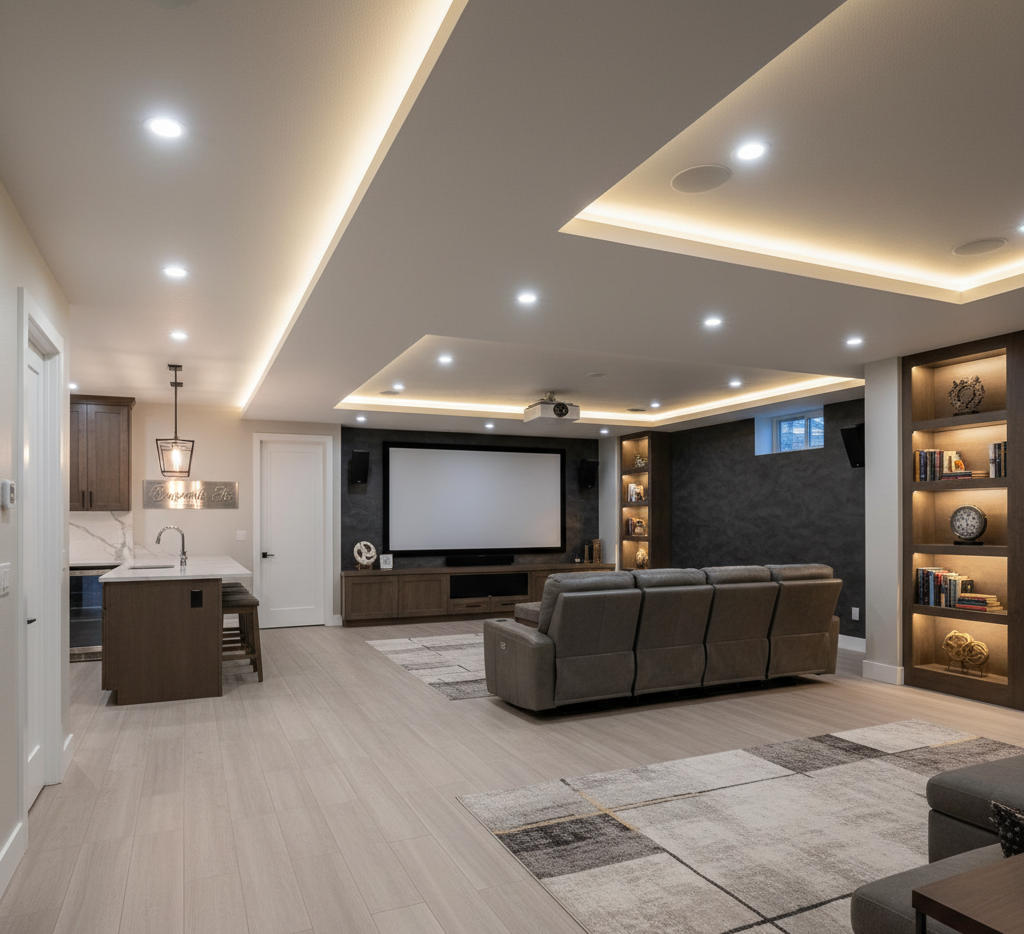
Build a Truly Cinematic Basement Theater
A home theater isn’t just a finished room—it’s an engineered performance space. If you want your Draper basement to deliver real cinematic quality, the design must come from professionals.
Schedule Your Free Theater Design Consultation
https://www.basementfinishing.com/our-services/basement-finishing/
Call Now: 801-733-7070
Let our design-build team turn your basement into the best room in your home.